The Secret Season: Why the Best Summer Gardens are Made in Winter
To the casual observer, winter is a fallow time. When the weather turns “frightful” and the last of the autumn colour has been swept away, it’s easy to assume the garden has simply gone to sleep. You might think there is little to do until the first flowers poke through the frost or the weather warms up.
However, I’ve always believed that one of the best-kept secrets of a truly spectacular garden is that the work carried out between December and February contributes more to the summer display than at any other time of year. While the plants are dormant, the gardener’s eye can see the “bones” of the space—the structure that is often hidden under the exuberant chaos of July.
The Art of the Winter Edit
I was working in a wonderful garden in Bromley last week, focusing my attention on a substantial main border. On paper, this border has a lot going for it: partial shade, moist soil, and a backdrop of trees and shrubs flanking a formal lawn. But over time, the narrative had become muddled. Perennials had crept into shrubs, and larger specimens were beginning to shoulder out their smaller neighbours.
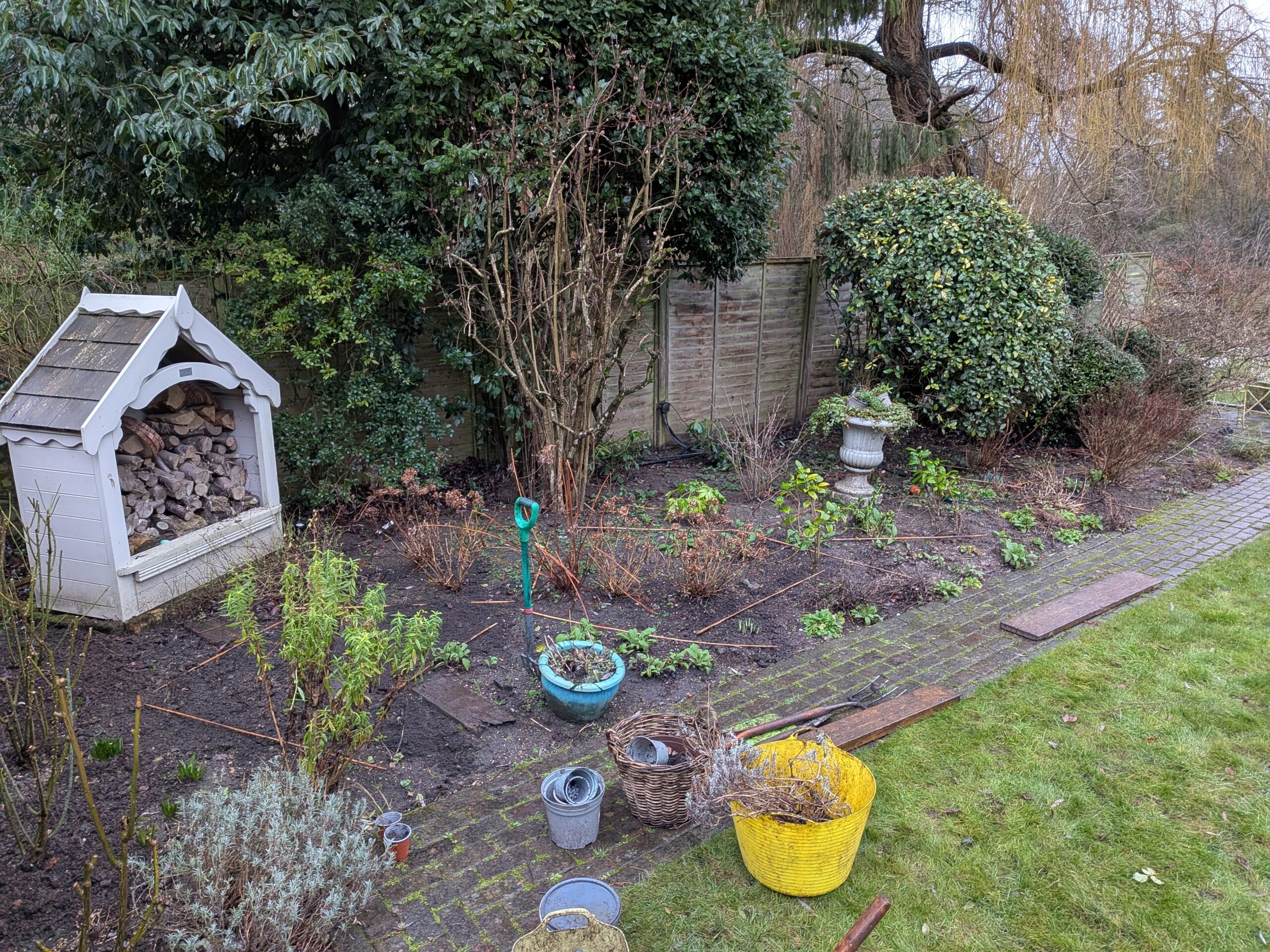
The clarity of mid-winter provided the perfect opportunity for an “editorial intervention” that simply wouldn’t be possible once the sap starts to rise. Here is how we prepared the space for the year ahead:
- Structural Pruning: I began by pruning the roses and evergreen shrubs. This wasn’t just about plant health; it was about creating light and air, revealing the gaps and making the ground accessible.
- Mapping the Gaps: With the structure cleared, the “missing pieces” of the puzzle became obvious. I marked out existing plant stations to see exactly where the border needed more “weight.”
- Lifting and Dividing: I took the opportunity to lift and divide overgrown perennials. This is the most cost-effective way to fill a garden. By replanting these smaller, invigorated clumps, I was also able to improve the soil with organic, slow-release fertiliser.
- Relocating and Spacing: Some shrubs were simply in the wrong place. Moving them now, while they are dormant, ensures they suffer the least amount of stress.
- Planting ‘In the Green’: I tucked in bulbs that were already “in the green” (started into growth) between the perennials, allowing them to naturalise and provide that essential early-season interest.
Why Timing is Everything
You might wonder why this can’t wait until the first warm days of April. The truth is, by then, it’s often too late. Once the light levels increase and plants begin to grow actively, they do not appreciate the upheaval of being divided or moved.
Furthermore, the “Spring Rush” is real. A gardener’s diary fills up rapidly in March with mowing, weeding, and immediate maintenance. By employing a gardener through the winter, you are investing in the improvement of your garden rather than just the maintenance of it.
The work we did in Bromley last week has given those plants a vital month to settle their roots before the growing season begins in earnest. It also allowed for a calm conversation with the client about selecting a few choice new specimens to finish the look.
Prepare Your Garden for 2026
If this has made you realise that your borders could do with a professional “edit” before the spring settles in, we would love to help. Transitioning your garden from a neglected winter space to the heart of your home starts now.
For expert horticultural help in Lewisham, Bromley, and the surrounding areas, please contact The Lewisham Garden Company Ltd. Let’s make sure your garden is ready to shine when the sun finally returns.